Showing posts with label Roberto Bolano. Show all posts

Thursday, December 31, 2015

Best Books I Read in 2015

It is the last day of 2015, and I finally feel ready to actually post what I think are the best books I read in 2015. I read a lot of amazing books this year, many of which I loved and thought were extremely well-written, but these books listed below specifically are ones that always seem to pop into my mind, that frame my thinking of other books, and whose images, characters and words keep me thinking/guessing. I'm also going to include a quote from each to entice you to read them, of course! They are in the order in which I read them.

Aside from these amazing books, peep my new bedsheets as the backdrop,
where were a gift from one of my best friends. Who wouldn't want
lovely bedsheets for Christmas?!
The City in Which I Love You by Li-Young Lee
But the boy is packing his shirts,
he is looking for his keys. Are you a god,the man screams, that I sit mute before you?
Am I a god that I should never disappoint? ('A Story' 15-18)
Li-Young Lee is one of my absolute favorite poets of all time. I want to say that Lee's poetry deals with a lot of big issues, such as being a refugee (he and his family fled from Indonesia when he was a baby, and knocked around a few countries in East Asia before settling in the US), religion, love, etc. But to just say that, to say Lee is a political poet, is not enough. All of his poetry are grounded in specific moments, images, and relationships, that when I think of what 'humane' means, I think of Lee's poetry. The City in Which I Love You exhibits, I think, Lee at his best. With stunning poems such as 'My Father in Heaven is Reading Out Loud,' which conflates the image of his own father with a Heavenly Father, Lee teases out the complexity of his relationship with his father, religion, and the legacy of his family's history.


The Luminaries by Eleanor Catton
'That is a good beginning; I am glad it is yours. Tonight shall be mine.'
'Ought we to have different ones?'
'Different beginnings? I think we must.'
'Will there be more of them?'
'A great many more' (832)
I read this book at the very beginning of 2015, and have not forgotten about it - images, characters, themes, and sentences recur in my mind, and connect with other things I've read in the past year. This novel has truly stayed with me. I don't think more than two days go by without me thinking about it. The Luminaries is an intricately plotted novel, that follows a sprawling cast of characters - there is a character list in the front of the novel! - in the gold-mining town of Hokitika, New Zealand in 1866. Catton uses the zodiac and astrology as the bones of her novel - each character is associated with a zodiac sign, for example - in order to showcase how they interact, collide, and circle one another in the events of the novel. The basic plot is there is a missing rich, young man named Emery Staines, and the other main characters are invested in him being alive or dead for whatever reason. The use of the zodiac and astrology is brilliant, and makes you think about the connections between the characters in new ways (although, do not be mistaken, this is not about horoscopes), and I think propels the basic narrative of the missing persons case in interesting ways. This novel is an odyssey, and by the end, I believe all the traveling you will have done with these characters is well worth it. 

Mariana by Monica Dickens
'At first she had thought that her heart was dead. She told herself that she had been through a searing experience which had left her as a woman set apart from love - a tragic figure. This sustaining vision had tided her over the misery of the end of last summer' (189).
This is the first novel published by Persephone Books I have ever read. I found it randomly in The Strand when I was looking for a Charles Dickens book - Monica is his great, great granddaughter! If you don't already know, Persephone Books publishes forgotten novels by (mostly) women. I am all for supporting women, and not letting women's contributions to literature be forgotten. This book was simply lovely. There is nothing like reading a satisfying romantic book that is not condescending towards its heroine (the titular character, Mariana), nor its audience, and it does so because it acknowledges and beautifully portrays the flaws and desires of its characters. We follow Mariana through ups and downs as she desperately tries to gain independence, and find a man she can truly love and who truly loves her. It's a well-written story about wanting a man, but not needing a man, which is a distinction too rarely made in novels about women, or in women's lives in general.

The Stone Gods by Jeanette Winterson
'Some religions call life a dream, or a dreaming, but what if it is a memory? What is this new world isn't new at all but a memory of a new world?' (87).
This is a bit of an odd one. A post-apocalyptic novel that jumps back and forth in time, between worlds (or maybe the same world? Never quite sure). For the most part, the novel follows Billie Crusoe, who falls in with a 'Robo sapien,' Spike, as they embark on a mission to find a new inhabitable planet, since Earth is dying after being ravaged by war and greed. In this novel, we basically get a queer android love story that investigates the nature of war, time, and humanity, itself. Really everything is in this novel.

The Argonauts by Maggie Nelson
'The pleasure of ordinary devotion. The pleasure of recognizing that one may have to undergo the same realizations, write the same notes in the margin, return to the same themes in one's work, relearn the same emotional truths, write the same book over and over again - not because one is stupid or obstinate or incapable of change, but because such revisitations constitute a life' (112).
I knew this book would be one of my favorites. Last year, I read Nelson's Bluets - which if you haven't read YOU SHOULD - and absolutely fucking loved it. It's a brilliant book, which I will hopefully talk about on here soon, but haven't yet since I have so many thoughts on it that they are like an avalanche in my mind. Which is also my situation with The Argonauts. But anyway, this book is what Nelson calls a book of 'autotheory,' meaning it is an autobiography of sorts, in which she uses critical theory as a lens for her life, and as a way to shape her life. The autobiographical part deals in particular with Nelson's marriage to her partner, Harry, who is fluidly gendered, and their having a baby. Nelson is interested in what it means to make a family, and is interested in how the language shapes family relationships, and queer relationships. Nelson is brilliant at weaving her personal story with critical and literary texts, and the effect is a richer, and more comprehensive understanding of her life.

Nazi Literature in the Americas by Roberto Bolaño
'The stories simply happen, period - produced by the sovereign power of chance unleashed, operating outside time and space, at the dawn of a new age, as it were, in which spatio-temporal perception is undergoing transformation and even becoming obsolete' (123-124).
At least one Bolaño was going to be on this list, and this year, it's Nazi Literature in the Americas, a fictional encyclopedia of right-wing authors. Bolaño makes up entire histories, and creates a tapestry of a literary world that never existed. In this endeavor, Bolaño pushes the boundaries of fiction. What does it mean to have a made-up encyclopedia? Something that is meant to the record the world as it is, but made-up? There seems to be a paradox of fiction and reality. And I don't even know where to begin to unpack why he decided on right-wing authors - the role of politics, fascism, and the specter of WWII and the Holocaust are dissertation-worthy + ten books of criticism.

Cloud Atlas by David Mitchell
'"Catch you all next time.' Luisa is going. 'It's a small world. It keeps recrossing itself"' (418).
I've just finished this book last week, and it blew my mind. The construction of the story is brilliant: 6 stories-within-stories, spanning centuries, and the globe. Each story leads into the next, and we see how people are connected across time and space. It's a very lofty goal, and the execution is perfect: never clinical, and never a slave to its conceit, this novel is so rich in its characters, and so brilliant in the way it shows their connection. Many talk about this novel in terms of how it discusses the 'universality' of human beings, reincarnations, that there is some deep, mysterious connection between us all. I'm not sure about all of those things, but what I am sure of is that this novel discusses brilliantly how we all become stories, passed on, retold, and forgotten.

_____

I also want to say a thank you to those that have been reading along, as I post my thoughts and theories on this blog. I'm excited for the new year, and more books!

Also, some time in the next few days I'm going to post more of a statistical analysis of the books I read in 2015. And by 'statistical analysis' I mean tally marks. So get ready!

Saturday, November 7, 2015

A Glimpse into NAZI LITERATURE IN THE AMERICAS

In my quest to read everything by and about Roberto Bolaño ever, I recently picked up Nazi Literature in the Americas, a very odd, fascinating, detailed book about people and things that do not exist. So basically, it does what fiction does, but on a whole other level. 

Nazi Literature in the Americas is meant to be an encyclopedia of right-wing authors, carefully detailing their lives, works, and political views. The thing is that none of the authors are real. The intricate details of their lives, the lists of various book they've written or read are also made up. In the back of the novel, is not only a glossary of 'secondary figures' in the lives of the authors already written about, but a glossary of all of the works, real and imagined, that are mentioned in the novel, including their supposed publisher and year released. The ability to make up this kind of detail, to create this entire web of lives, is a great example of what makes Bolaño such an incredibly important writer.

In Bolaño's writing, I am perpetually fascinated by the narrative voice in his works. As in By Night in Chile, Amulet, or parts of The Savage Detectives, we get a first-person narration, and in many other of his works, there seems to be a third-person omniscient narrator, although that is never quite the case. As we zoom in and out of the lives of the numerous characters in Bolaño's works, there is a sense that the narrator is close to the characters in that they overlap and run in similar circles in the universe of the story or novel. This is really salient in Nazi Literature in the Americas, and by the end, we even find out that this narrator has been Roberto Bolaño himself, though most likely that is still a persona, as Arturo Belano is Bolaño's surrogate/persona in many of his stories, and most prominently in The Savage Detectives and Amulet.

Let me provide an example. In Nazi Literature in Americas, we get what seems to be a simple retelling of the events of their lives. But then we get lines from the narrator that are interpretive because of a personality. For example, the account of Silvio Salvático (47-48), a prolific poet who died in an old-age home, and whose 'books were never published. His manuscripts were probably thrown out with the trash or burned by the orderlies' (48). A simple third-person omniscient narrator would be able to tell us whether those manuscripts were trashed or burned, but we are left with the narrator speculating - the life of Silvio Salvático and his works are still a mystery to our narrator, and to us.

Little moments like the one above are peppered throughout the novel, and in the last story, the account of Carlos Ramirez Hoffman (179-204), the narrator is a part of the story, and named Roberto Bolaño. Hoffman was a poet that would write his poetry in the sky with an airplane, and was also a murderer. Bolaño's character is asked to help find Hoffman, because he knew him at one point.

This tenuous, gradual reveal of the narrator actually being Bolaño, or as I said before at least a persona Bolaño takes on, especially considering Hoffman is not a real person, is so fascinating to me because it perfectly showcases this kind of smashing of fiction and reality in the endeavor that is Nazi Literature in the Americas. All of fiction is about reading about people that are not real, but Bolaño makes that the very foundation of this novel: the constant acknowledgement and participation in something that is not real. The verisimilitude of the novel would make you think that you could get lost in the novel, but I think the effect is much more in 1) making you kind of wish these people and their works were real, because their lives are rendered so lucidly, and their works seemingly so interesting 2) wondering why are you are reading account after account of the 'biographies' of people that do not exist. So as a reader, we are never 'lost' in the world of the novel, and the lives of these characters, while Bolaño is our unknown, mysterious guide. 

As with all of Bolaño's works, I never walk away from them feeling comfortable or sure of what I've read. I think because the characters and the loping paths they take are so perfectly rendered, that as a reader, you become aware of a profound inability to understand them and their world, which I think is a crucial element of Bolaño's works. With Nazi Literature in the Americas, we only get a glimpse into the enormous and sprawling world these characters inhabit, and perhaps the only thing to do is to make the effort to see into that world.

Thursday, August 20, 2015

Pick-Up Line: 'It is a small country.'

Welcome to Pick-Up Line! My newest feature to this blog, in addition to my other features Interesting or Stupid?, Meta Moment, and Quick Chat, which you should catch up on *wink wink* In Pick-Up Line, I will discuss in-depth one line, or several, of a poem, or a sentence(s) of prose. I have found that when I read something, a line or two from it echoes in my mind after I've finished reading it for one reason or another. And I've named this feature Pick-Up Line to intrigue you, reader, to read the poem or book or collection. This feature will most likely feature poetry, because I think we all need more poetry in our lives, and it can be hard to get into poetry, I admit. So I'm hoping my focus on a line or two is enticing enough to have you read more poetry. Hence, my cheeky title.

Let us begin our first installment! I posted yesterday about The Country Between Us by Carolyn Forché. This book is seriously beautiful, and if you can, read the whole thing. The line I will discuss from The Country Between Us is from the poem 'The Visitor,' which you can find here.


'It is a small country' (line 8)

As you might be able to tell from the title, the idea of a country is central to the text. The title implies distance, and over the course of the collection we see what physical and emotional distance can mean between people. We also see a country being made and unmade, as this book is partly about the Salvadoran Civil War. In the poem, 'The Visitor,' a country is the hand of a lover, the imagining of a hand of a lover, or the wind imagined as the breath of a lover. The wind against the walls of the prison is
                                      ...his wife's breath
slipping into his cell each night while he
imagines his hand to be hers. It is a small country (lines 6-8).
There are two definitions of a country here:

  1. It is a physical place, but it is the physical body and breath of his wife.
  2. It is an imagined place, as Francisco is imagining the body and breath of his wife with him.

These ideas of a country are interesting because they imply that our 'citizenship' is tied with those we love. It reminds me of something Roberto Bolaño said - one of my absolute favorite authors of all-time. Bolaño was from Chile, and he grew up in various countries in Latin America. He supported the socialist regime in Chile, which was eventually overthrown by dictator Augusto Pinochet. Subsequently, he left Chile, fearing for his life, and because he was dissatisfied and antagonistic towards the prominent literary figures of Chile. Bolaño essentially put himself in exile. In his last interview ever, Bolaño said, 'My only country is my two children and perhaps, though in second place, some moments, streets, faces or books that are in me.'

In Bolaño's quote, and in Forché's poem, what we're seeing is that when you are stripped of the 'country' you were born, maybe even imprisoned by that country, it calls into question your citizenship and allegiance, not in a legal sense, but an existential one: what exactly does the borders and land of a country do for you when they are seemingly against you? When to be on one side of a wall or another means imprisonment or exile? And if we take into account the idea of a country being imagined - as it is implied through Francisco imagining the wind as his wife's breath, and imagining her hand - then that problem is only exacerbated. These delineations are illusory, but in our respective societies, we all commit and agree: yes, this a country. But it is also because of those agreements that a 'small country' can be made out of relationships.

Can I also say how beautiful it is that Forché specifies a small country. The inclusion of the word provides the perfect beat to slow the line and provide space for the gravity of the word 'country' and all that it implies for the poem. Including the word 'small' also shows a tenderness to the relationship, that it is concerned with the small things of feeling someone's breath, of holding someone's hand.

Let me know your thoughts, and if you've read anything by Carolyn Forché, or Roberto Bolaño, who I ALWAYS want to talk about. 

Sunday, May 10, 2015

April Books

So this is a bit late, but I wanted everything to be perfect for this cozy little post about the books I bought in the month of April. I want to share the books I purchase each month 1) for myself, so that I can visualize and think about what it is I get every month, and 2) give you (my potential readers) ideas about books to read, and of course hear from you what books you're investing in. Also, I'd love to hear from you if you've read any of these books!

For these posts, I wanted to add some information that I thought would be useful, and just fun (for me, at least). Firstly, I've decided that I will provide the store in which I bought the book, in order to see my own trends of where I buy books, and for you, my readers, if you'd like to know where to potentially get the same book. Secondly, I've decided to add the citation of the book. I quite like writing citations - it's the former English major in me - so I thought I'd add them. Let me know if you'd like any more information about the books I buy. 

And now, without further adieu, the books I bought in the month of April:

Photo: Katie Chin


Photo: Katie Chin
We Should All Be Feminists || Chimamanda Ngozi Adichie
Place of Purchase: McNally Jackson Books
Adichie, Chimamanda Ngozi. We Should All Be Feminists. New York: Anchor Books, 2015.


Photo: Katie Chin
Pride and Prejudice || Jane Austen
Place of Purchase: Kinokuniya Bookstore
Austen, Jane. Pride and Prejudice. London: Vintage Classics, 2014.


Photo: Katie Chin
A Natural History of Dragons: A Memoir by Lady Trent || Marie Brennan
Place of Purchase: McNally Jackson Books
Brennan, Marie. A Natural History of Dragons: A Memoir by Lady Trent. New York: Tor, 2014.


Photo: Katie Chin
Between Parentheses: Essays, Articles and Speeches, 1998-2003 || Roberto Bolaño
Place of Purchase: WORD
Bolaño, Roberto. Between Parentheses: Essays, Articles and Speeches, 1998-2003. New York: New Directions, 2014.


Photo: Katie Chin
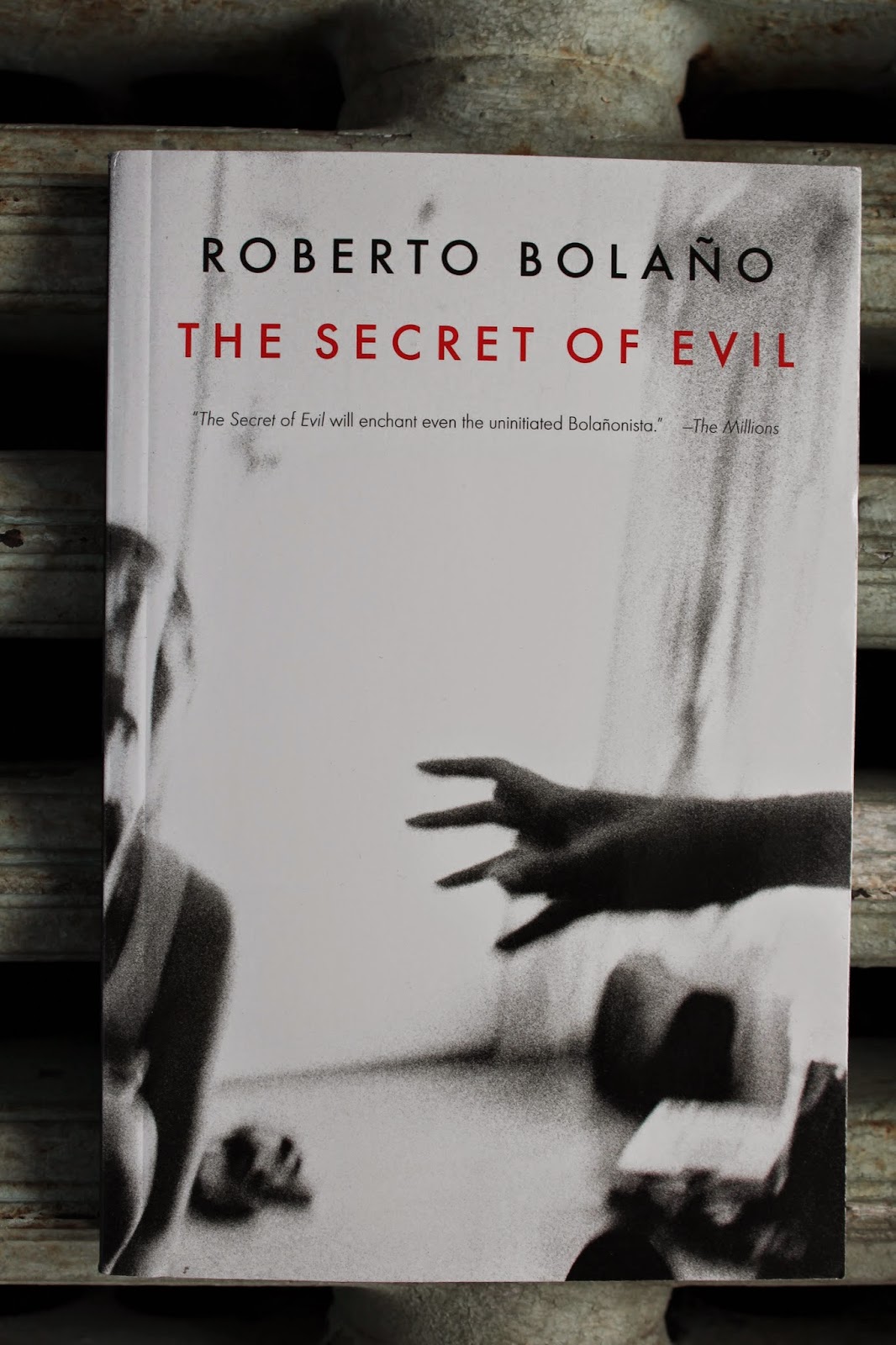
The Secret of Evil || Roberto Bolaño
Place of Purchase: Three Lives & Company
Bolaño, Roberto. The Secret of Evil. New York: New Directions, 2014.


Photo: Katie Chin
Helen in Egypt || H.D.
Place of Purchase: McNally Jackson Books
D., H. Helen in Egypt. New York: New Directions, 1974.


Photo: Katie Chin
The Story of a New Name || Elena Ferrante
Place of Purchase: McNally Jackson Books
Ferrante, Elena. The Story of a New Name. New York: Europa, 2013.


Photo: Katie Chin
Those Who Leave and Those Who Stay || Elena Ferrante
Place of Purchase: McNally Jackson Books
Ferrante, Elena. Those Who Leave and Those Who Stay. New York: Europa, 2014.


Photo: Katie Chin
Bad Feminist: Essays || Roxane Gay
Place of Purchase: McNally Jackson Books
Gay, Roxane. Bad Feminist: Essays. New York: Harper Perennial, 2014.


Photo: Katie Chin
Autobiography of My Mother || Jamaica Kincaid
Place of Purchase: bookbook
Kincaid, Jamaica. Autobiography of My Mother. New York: Farrar Straus Giroux, 1996.


Photo: Katie Chin
Rose || Li-Young Lee
Place of Purchase: Three Lives & Company
Lee, Li-Young. Rose. Rochester: BOA, 1986.